Hey there, amazing readers! It’s your go-to English blog influencer here, thrilled to share a glimpse into how I craft content that keeps nearly 100,000 of you coming back every single day.
If you’ve ever wondered how I consistently deliver those juicy insights and practical tips on civil engineering, sustainable urban development, and cutting-edge tech that truly resonate, you’re in the right place.
I always aim to pull back the curtain on complex topics, making them accessible and genuinely useful, almost like we’re just chatting over a cup of coffee.
I pour my real-world experience and the latest industry happenings into every single post, ensuring you’re always getting fresh, authoritative perspectives.
My secret? It’s not really a secret at all – it’s about genuinely connecting with you, understanding what questions keep you up at night, and then providing answers that are backed by solid understanding and, yes, a dash of personal insight from years in the field.
I’ve always believed that the best content isn’t just informative; it’s engaging, makes you think, and ultimately leaves you feeling more confident and well-informed.
I truly strive to make sure every article offers immense value, whether it’s unraveling the mysteries of advanced structural analysis or delving into the environmental impacts of modern infrastructure.
This approach not only builds trust and keeps you engaged for longer – which, let’s be honest, helps keep this blog thriving – but also ensures that the information I share is something you can practically apply, making your own professional journey a little smoother.
I often find myself reflecting on past projects, sharing challenges I’ve faced, and the solutions I discovered, because there’s nothing quite like learning from real-life scenarios, right?
That’s the real magic behind keeping this community vibrant and growing.
When we talk about civil engineering, it’s easy to get caught up in the grand designs of skyscrapers and bridges.
But beneath all that concrete and steel lies a fundamental truth: everything rests on the ground. Over my years in the field, I’ve seen firsthand how ignoring what’s happening underground can lead to catastrophic, and frankly, heartbreaking, failures.
It’s not just about building strong; it’s about building smart, and that starts with truly understanding the very foundation we’re working on. Factors like climate change are now throwing new curveballs, making soil conditions even more dynamic and unpredictable, requiring us to be more vigilant than ever.
Trust me, the unseen world beneath our feet holds far more secrets and influence than most realize. Let’s dive deeper and uncover why geotechnical investigations are absolutely non-negotiable for any successful project.
Unearthing the Earth’s Hidden Truths: Why It Matters

You might think of civil engineering as mostly above-ground work, all about visible structures and their impressive scale. But from where I stand, having spent years with my boots on the ground (literally!), the real magic, and indeed the real risk, often lies hidden beneath our feet. Ignoring what’s going on underground is like building a house without checking the foundation – you’re just asking for trouble, and believe me, the earth has a way of reminding us of its power when we cut corners. I’ve witnessed projects where seemingly minor oversights in geotechnical surveys led to massive delays, exorbitant cost overruns, and in the worst cases, structural failures that put lives at risk. It’s a sobering thought, but it truly underscores why understanding the soil, rock, and groundwater beneath a proposed site isn’t just a good idea, it’s a critical first step. Every single construction project, regardless of its size or complexity, is fundamentally a relationship with the ground it stands on. You’re constantly negotiating with nature, and to do that successfully, you need to speak its language, which in our world means thorough geotechnical investigations. It’s about proactive problem-solving, identifying potential issues before they become crises, and ultimately ensuring the longevity and safety of our infrastructure. Think of it as the ultimate due diligence, the foundational layer of knowledge that informs every subsequent design decision.
The Crucial Role of Site Characterization
- Before any shovel hits the ground, we need a detailed understanding of the site’s geology, hydrology, and existing soil conditions. This isn’t just a formality; it’s about painting a comprehensive picture of what we’re up against.
- From boreholes providing soil samples to in-situ testing revealing strength and compressibility, every piece of data is like a clue in a fascinating geological detective story.
- This phase is where we identify potential hazards like unstable slopes, expansive clays, or high water tables, allowing us to factor them into our designs from the very beginning.
Preventing Catastrophe Through Early Detection
- I can’t stress enough how much easier and cheaper it is to address a problem on paper than to fix a structural issue once construction has begun, or worse, after a building is occupied.
- Geotechnical investigations provide us with the foresight to design appropriate foundations, implement effective dewatering strategies, or even decide if a site is simply unsuitable for a particular type of structure.
- It’s the ultimate risk mitigation tool, allowing engineers to develop robust solutions that can withstand the test of time and environmental stresses.
Building on Solid Ground: Foundations of Foresight
When I look at a towering skyscraper or a sprawling bridge, my mind instantly goes to the immense forces at play beneath them. It’s not just the weight of the structure itself, but also dynamic loads from traffic, wind, and even seismic activity. All these stresses are ultimately transferred to the ground, and if that ground isn’t capable of bearing the load, well, that’s where things get shaky. I’ve learned through hard-won experience that a robust foundation isn’t just about pouring a thick slab of concrete; it’s about matching the foundation type perfectly to the specific soil conditions. This often requires deep dives, both literally and figuratively, into the earth’s composition. For instance, designing a deep piled foundation in soft, compressible clay is a completely different ballgame than a shallow spread footing on dense, granular soil. The geotechnical report acts as our guide, detailing the soil’s bearing capacity, settlement characteristics, and potential for liquefaction in earthquake-prone zones. Without this vital information, engineers would be effectively designing blind, relying on guesswork rather than data-driven decisions, which is a recipe for disaster in our field. Trust me, the difference between a successful project and one that ends up in court often boils down to the quality and thoroughness of these initial ground investigations.
Tailoring Foundation Design to Earth’s Whims
- One size definitely does not fit all when it comes to foundations. The type, depth, and design of a foundation are entirely dependent on the geotechnical properties of the site.
- Whether it’s shallow footings, deep piles, rafts, or caissons, the choice is driven by detailed analysis of soil layers, groundwater levels, and anticipated loads.
- I’ve personally been involved in projects where a slight change in the soil profile at one corner of a building necessitated a completely different foundation approach for that section, highlighting the localized variability we often encounter.
Understanding Soil-Structure Interaction
- The relationship between the foundation and the ground is a dynamic one, constantly interacting and influencing each other.
- Engineers must predict how the soil will respond to the applied loads – will it settle uniformly? Will there be differential settlement? What about consolidation over time?
- Accurate geotechnical data allows us to model this interaction effectively, ensuring the structure remains stable and serviceable throughout its intended lifespan.
The Climate Conundrum: Adapting to a Shifting Earth
If there’s one thing that’s added a significant layer of complexity to my work in recent years, it’s undoubtedly climate change. What was once considered stable ground can now become surprisingly unpredictable. We’re seeing more intense rainfall events leading to increased erosion and landslides, prolonged droughts causing soil desiccation and settlement issues, and rising sea levels impacting coastal infrastructure. I remember a project near a river where historical data suggested a certain flood plain, but recent extreme weather patterns completely overran our expectations, challenging the stability of a new embankment. This isn’t just theoretical; it’s something we civil engineers are contending with every single day. Geotechnical investigations now have to incorporate forward-looking climate projections, assessing how future environmental shifts might impact soil behavior and groundwater levels over the lifespan of a structure. It means our traditional methods need to be continually refined, and our understanding of earth processes must be more robust than ever. It’s a humbling reminder that nature bats last, and our job is to design with that profound respect in mind, anticipating and mitigating the impacts of an ever-changing environment. This proactive approach isn’t just good practice; it’s essential for building resilient communities.
Extreme Weather’s Impact on Soil Stability
- Increased frequency and intensity of storms can lead to rapid saturation of soils, significantly reducing shear strength and increasing the risk of landslides and slope failures.
- Conversely, prolonged dry spells can cause cohesive soils to shrink, leading to ground movement and potential damage to light structures.
- We need to consider these new realities in our initial site investigations, looking beyond historical data to predict future soil responses.
Rising Water Tables and Their Geotechnical Implications
- Coastal areas, in particular, are grappling with rising sea levels, which can elevate groundwater tables. This reduces the effective stress on soils, potentially impacting their bearing capacity and increasing the risk of liquefaction in seismic zones.
- Increased saturation can also accelerate the deterioration of buried infrastructure, necessitating more robust material choices and protective measures.
- It’s a complex interplay that demands sophisticated geotechnical modeling to assess long-term risks.
Decoding the Earth’s Language: Essential Investigation Methods
Stepping onto a new site, my mind immediately starts picturing what lies beneath – it’s like an X-ray vision for the earth, trying to decipher its inner workings. But, of course, that vision needs a lot of help from specialized tools and techniques. We’re not just guessing; we’re meticulously gathering data through a variety of methods, each designed to tell us something specific about the ground. From the initial reconnaissance, where we literally walk the site and observe its features, to advanced laboratory testing, every step is crucial. I’ve spent countless hours in the field overseeing drilling operations, carefully examining soil cores, and supervising in-situ tests like the Standard Penetration Test (SPT) or Cone Penetration Test (CPT). Each one provides a different piece of the puzzle, revealing the soil’s density, strength, permeability, and compressibility. It’s like a medical diagnosis for the earth, where precision and comprehensive testing are paramount. Without this arsenal of investigation methods, we’d be trying to solve complex engineering problems with half the information, and that’s a gamble I’m never willing to take. My personal experience has taught me that the more data we have, the more confident and efficient our designs become, leading to better, safer outcomes.
Standard Geotechnical Field Tests
-
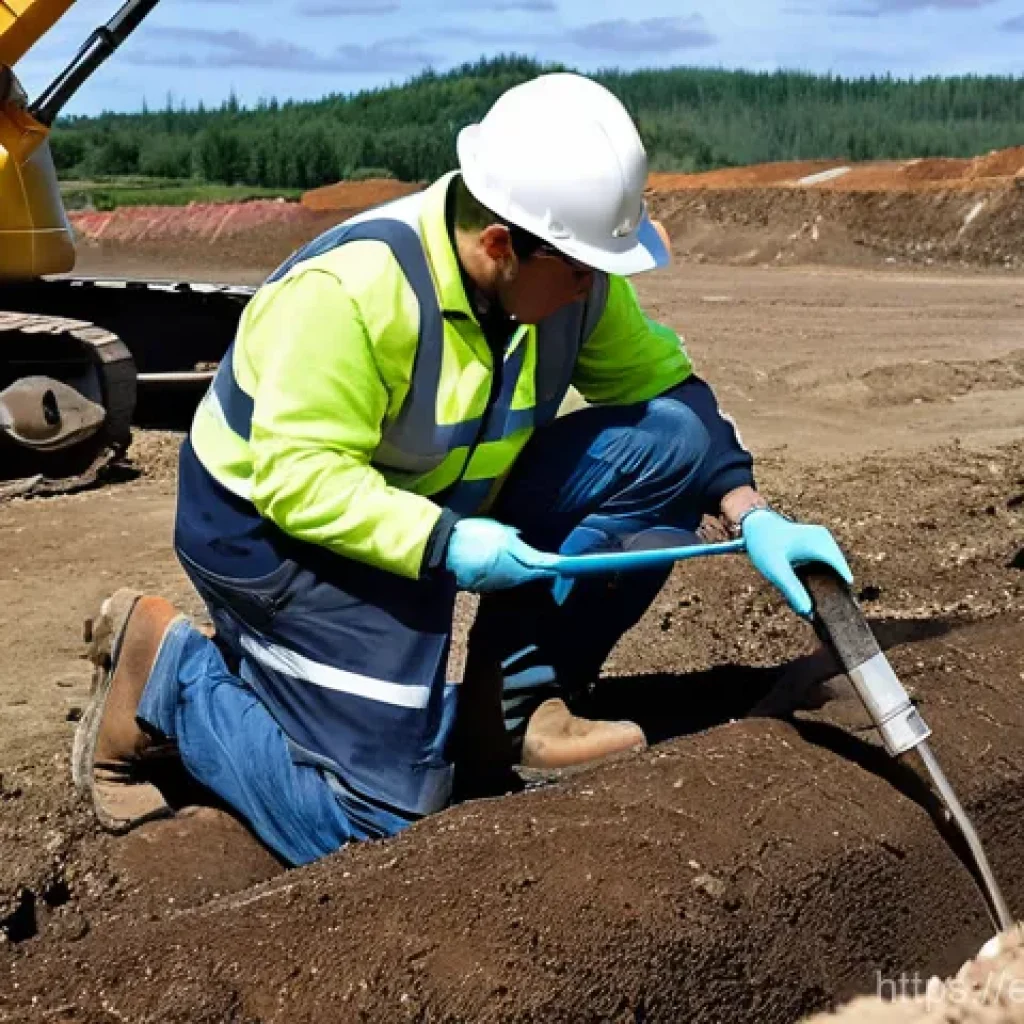
Borehole Drilling and Sampling: This is our primary way of getting physical soil and rock samples from various depths. These samples are then brought to the lab for detailed analysis. I always stress the importance of careful handling of these samples; their integrity is everything.
-
Standard Penetration Test (SPT): A classic. We drive a split-spoon sampler into the ground, counting the hammer blows required for penetration. This ‘N-value’ gives us an indication of the soil’s density and strength, especially for sands and gravels.
-
Cone Penetration Test (CPT): A more continuous and often faster method where a cone is pushed into the ground, measuring tip resistance and sleeve friction. It provides excellent data for characterizing soil stratigraphy and strength. I’ve seen this method save a lot of time on large sites.
-
Vane Shear Test: Ideal for determining the undrained shear strength of soft to firm cohesive soils like clays. It’s a relatively simple yet highly effective in-situ test.
Laboratory Analysis: Unlocking Soil Secrets
-
Once we have samples from the field, they head to the lab for a battery of tests. This is where we truly quantify the soil’s engineering properties.
-
Classification Tests: Grain size analysis (sieve and hydrometer), Atterberg limits (liquid limit, plastic limit), and specific gravity help us classify the soil, which in turn gives us a general idea of its behavior.
-
Strength Tests: Unconfined compression tests, direct shear tests, and triaxial tests are performed to determine the soil’s shear strength parameters (cohesion and friction angle) under various stress conditions.
-
Consolidation Tests: These help us predict how much a saturated clay layer will settle over time under sustained load, a critical factor for long-term structural stability.
The Economic Imperative: Investing in Ground Truth
I’ve been in enough project meetings to know that budget conversations can get heated, and often, geotechnical investigations are seen as an easy target for cost-cutting. “Can’t we just get by with a few boreholes?” or “Do we really need all that fancy testing?” are questions I’ve heard more times than I can count. My response is always firm: investing in thorough ground truth at the outset is not an expense; it’s a critical investment that saves exponentially more down the line. I’ve personally seen scenarios where skimping on an initial geotechnical survey led to unforeseen ground conditions during construction, resulting in massive change orders, significant delays, and even partial redesigns – costs that dwarfed any initial savings. Imagine halting a multi-million dollar construction project because an unknown compressible clay layer was discovered mid-excavation. The impact on scheduling, materials, and labor is astronomical. A comprehensive geotechnical report, while an upfront cost, empowers project teams with the knowledge to make informed decisions, optimize foundation designs, procure materials accurately, and set realistic construction schedules. It literally de-risks the entire venture, protecting both the budget and the reputation of everyone involved.
Saving Pennies Now, Paying Pounds Later
- The initial cost of a thorough geotechnical investigation might seem substantial, but it pales in comparison to the potential expenses of unexpected ground conditions.
- Rework, redesigns, project delays, and litigation can quickly escalate costs into the millions, making the upfront investment look incredibly modest.
- I’ve observed that projects with robust geotechnical planning almost invariably run smoother and closer to budget.
Optimizing Design and Construction Efficiency
- Accurate soil data allows engineers to design the most efficient and cost-effective foundation system for the given site, avoiding over-design or under-design.
- It helps contractors anticipate challenges, plan excavation and shoring methods effectively, and minimize unforeseen issues that can grind progress to a halt.
- This proactive approach ensures that resources are allocated wisely and construction proceeds on a predictable timeline.
| Test Name | Type | Primary Information Gained |
|---|---|---|
| Standard Penetration Test (SPT) | In-situ (Field) | Soil density, relative consistency, rough estimation of shear strength for granular soils. |
| Cone Penetration Test (CPT) | In-situ (Field) | Continuous soil stratigraphy, strength, and compressibility characteristics. Highly detailed. |
| Vane Shear Test | In-situ (Field) | Undrained shear strength of soft cohesive soils (clays). |
| Grain Size Analysis | Laboratory | Particle size distribution for soil classification. |
| Atterberg Limits | Laboratory | Plasticity characteristics of cohesive soils (Liquid Limit, Plastic Limit). |
| Triaxial Compression Test | Laboratory | Detailed shear strength parameters (cohesion, friction angle) under various stress states. |
| One-Dimensional Consolidation Test | Laboratory | Compressibility and settlement characteristics of cohesive soils over time. |
The Geotechnical Report: Your Project’s Blueprint
After all the field work, the lab tests, and the endless hours of analysis, it culminates in one of the most vital documents for any civil engineering project: the geotechnical report. This isn’t just a collection of numbers and graphs; it’s the definitive guide that translates the earth’s complexities into actionable insights for designers and builders. I’ve always viewed it as the project’s foundation blueprint, detailing everything from the stratigraphy – the layering of different soils and rocks – to the recommended foundation type, anticipated settlement, and potential environmental concerns like groundwater contamination or seismic risks. It often includes recommendations for earthworks, slope stability, and even the suitability of on-site materials. Without this comprehensive report, other engineers on the team – structural, civil, environmental – would be working in a vacuum, unable to design safely or efficiently. It’s the ultimate collaborative tool, ensuring that all disciplines are working from the same, accurate understanding of the ground conditions. My experience has shown me that a well-written, clear, and comprehensive geotechnical report is worth its weight in gold, guiding every subsequent decision and ensuring the project’s success from the ground up.
Key Elements of a Geotechnical Report
-
Site Description and History: Provides context, including any previous land use or environmental factors that might influence ground conditions.
-
Subsurface Investigation Methods: Details the specific tests performed in the field, including borehole logs, CPT soundings, and their locations.
-
Laboratory Test Results: Presents the findings from all laboratory analyses, quantifying soil properties.
-
Engineering Analysis and Recommendations: This is the heart of the report, interpreting the data and providing practical advice on foundation type, bearing capacity, settlement predictions, and any necessary ground improvement or earthwork considerations.
-
Environmental Considerations: Addresses issues like groundwater conditions, potential for contamination, or liquefaction in earthquake zones.
Bridging the Gap Between Ground and Design
- The geotechnical report acts as the critical bridge, translating raw subsurface data into practical design parameters that structural engineers can use.
- It helps inform decisions on building materials, construction techniques, and long-term maintenance strategies, ensuring the structure is compatible with its environment.
- Effective communication of these findings is paramount, making sure that every stakeholder understands the implications of the ground conditions on the overall project.
The Human Element: Experience, Expertise, and Ethical Practice
While we rely heavily on scientific instruments and rigorous testing, I truly believe that the most invaluable tool in any geotechnical investigation is the human element – the experienced engineer. It’s not just about collecting data; it’s about interpreting it, understanding the nuances, and making informed judgments based on years of field experience. I’ve come across situations where the raw data might suggest one thing, but a seasoned engineer’s gut feeling, backed by similar past projects, points to a different, more critical interpretation. This isn’t guesswork; it’s the culmination of countless hours spent on sites, observing, learning, and refining one’s understanding of how the earth behaves. An ethical approach is also non-negotiable; shortcuts in geotechnical work can have devastating consequences, and upholding the highest standards of professionalism and integrity is paramount. This means sometimes pushing back on budget cuts, or advocating for more thorough testing, even when it might be inconvenient. Ultimately, it’s about ensuring public safety and the longevity of our infrastructure, and that responsibility rests heavily on our shoulders. It’s why I’m so passionate about sharing these insights – because the more we collectively understand, the stronger and safer our world becomes.
The Unquantifiable Value of Experience
- No software or algorithm can fully replicate the nuanced judgment of a geotechnical engineer who has seen a wide array of soil conditions and project challenges.
- Experience allows for the identification of subtle indicators, the prediction of unexpected behaviors, and the development of creative solutions that go beyond textbook approaches.
- I’ve found that mentors who shared their real-world anecdotes and lessons learned were instrumental in shaping my own understanding and problem-solving skills.
Ethical Imperatives in Ground Engineering
- The responsibility to ensure public safety and environmental protection is at the core of geotechnical engineering.
- This requires unwavering commitment to accurate reporting, unbiased analysis, and adherence to professional standards, even when facing pressure to cut corners.
- Upholding these ethical principles not only builds trust within the industry but also safeguards the communities we serve.
Wrapping Things Up
And there you have it, folks! We’ve journeyed through the unseen world beneath our feet, uncovering why geotechnical investigations aren’t just an optional extra, but the absolute bedrock of any successful civil engineering project. It’s about more than just digging holes; it’s about listening to what the earth has to tell us, anticipating its quirks, and designing with foresight. My years in the field have taught me that respecting these hidden truths saves more than just money; it safeguards lives and ensures the longevity of the infrastructure we pour our hearts and expertise into. Keep building smart, keep building safe!
Useful Information to Keep Handy
1. Always prioritize continuous learning in our dynamic field. Technology like BIM (Building Information Modeling) and advanced geotechnical software are constantly evolving, and staying current is key to staying ahead.
2. Networking is incredibly powerful. Attend industry conferences, join professional organizations, and connect with peers. You’d be amazed at the insights and opportunities that come from sharing experiences over a casual chat.
3. Integrate sustainability into every design. Climate change isn’t just a buzzword; it’s a real-world factor affecting soil stability and water tables. Thinking green from the ground up makes our projects more resilient and environmentally responsible.
4. Master essential software tools. Proficiency in CAD, GIS, and specialized analysis programs is no longer a luxury but a fundamental skill that significantly boosts efficiency and accuracy in project delivery.
5. Never compromise on site safety. A robust safety culture, from personal protective equipment to comprehensive risk assessments, is paramount. Remember, every worker going home safely at the end of the day is our ultimate goal.
Key Takeaways
The core message I truly hope you carry forward from today’s discussion is that geotechnical investigations are the unsung heroes of civil engineering. They are not merely regulatory hurdles, but intelligent investments that underpin the safety, cost-effectiveness, and long-term resilience of our built environment. My personal experience, spanning countless projects from minor foundations to complex infrastructure, consistently reinforces that thorough ground analysis prevents unforeseen challenges, mitigates risks, and ultimately leads to superior structural integrity. Ignoring the earth’s complexities is a gamble too costly to take. Instead, by embracing detailed subsurface exploration, we empower ourselves to make informed decisions, optimize designs, and construct infrastructure that truly stands the test of time and changing environmental conditions. It’s about building with confidence, backed by science and seasoned judgment, ensuring every structure we create contributes positively and durably to our communities.
Frequently Asked Questions (FAQ) 📖
Q: uestions
A: bout Geotechnical Investigations
Q: Why are geotechnical investigations absolutely non-negotiable for any successful project, big or small?
A: I’ve been around the block a few times, and honestly, if there’s one thing I’ve learned the hard way, it’s that skipping a proper geotechnical investigation is like building a house of cards on a wobbly table.
You just know it’s going to come crashing down. We’re talking about things like differential settlement, where one part of your structure sinks more than another – imagine cracks snaking through walls, floors becoming uneven, or worse, structural failure.
I once worked on a site where previous developers thought they could cut corners because it “looked” stable. Turns out, there was an old, unmapped underground stream, leading to massive foundation issues a few years down the line that cost millions to fix, not to mention the reputational hit.
It’s not just about what you see; it’s about the hidden risks: varying soil compositions, groundwater levels, potential for liquefaction in seismic zones, or even old buried utilities.
Trust me, spending a little upfront on understanding your ground is an investment that saves you a fortune in headaches, repairs, and legal battles later.
It’s about securing your peace of mind and the longevity of your project.
Q: What exactly happens during a geotechnical investigation? It sounds a bit mysterious!
A: Oh, it’s far less mysterious than it sounds, though definitely crucial! Think of it as giving your construction site a thorough health check-up before you even think about breaking ground.
Typically, it starts with a site reconnaissance – basically, a careful walk-through, observing surface features, existing structures, and any signs of past instability.
Then, the real fun begins with drilling boreholes. We use specialized equipment to bore down into the earth, extracting soil and rock samples at various depths.
These samples are then whisked away to a lab for extensive testing. We’re talking about figuring out things like soil strength, compressibility, permeability, and density.
Sometimes, we’ll also conduct in-situ tests right there on site, like Standard Penetration Tests (SPT) or Cone Penetation Tests (CPT), which give us immediate data on soil behavior.
And let’s not forget about groundwater – understanding its levels and flow can make or break a foundation design. All this data is then compiled into a comprehensive report that guides engineers on the best foundation type, potential risks, and recommendations for site preparation.
It’s a meticulous process, but absolutely vital for ensuring your structure stands strong and safe.
Q: Given the costs, can smaller projects, like a new home or a small commercial building, really afford to skip a full geotechnical study?
A: Ah, the age-old question, and one I hear constantly! While it might seem tempting to cut costs on a smaller project, believing the risks are proportionally smaller, my experience tells a very different story.
The truth is, even a residential home or a modest commercial building can face catastrophic issues if built on unsuitable ground. Imagine you’ve poured your life savings into building your dream home, only for it to develop severe foundation cracks within a few years because of expansive clay soils that weren’t identified.
The cost of underpinning a house or repairing a failing foundation can easily run into tens or even hundreds of thousands of dollars – far exceeding the initial cost of a geotechnical investigation.
For smaller projects, a full-blown investigation might be scaled down, but some level of soil testing is always recommended. Many building codes actually mandate it, especially in areas with known geological challenges.
It’s like buying insurance for your most significant investment. Skipping it isn’t saving money; it’s gambling with your future, and frankly, it’s a gamble I’ve seen too many people lose.
Don’t let that be you!